GST on a restaurant bill looks simple until someone asks whether the rate is 5% or 18%, or why the restaurant cannot claim tax paid on its purchases. This guide explains the common cases in plain language. It is general information, not tax advice, and rules can change, so confirm your own position with your CA.
The two rates most restaurants deal with
- 5% without input tax credit (ITC): this applies to most standalone restaurants, and to restaurants in hotels that are not classed as specified premises
- 18% with ITC: this applies to restaurants inside specified premises, which generally means hotels with a room tariff above ₹7,500 per unit per day
Under the rules in force from April 2025, whether a hotel counts as specified premises depends on its room tariff in the previous financial year, and a hotel below the limit can opt in by making a declaration. If your restaurant is inside a hotel, ask your CA which position applies to you each year.
What 'without ITC' means for your costs
Input tax credit lets a business reduce the GST it owes by the GST it paid on purchases. At 5% without ITC, the GST you pay on supplies, rent or equipment cannot be set off. It becomes part of your cost, which is one reason purchase prices matter so much to your food cost.
Takeaway and delivery orders
Takeaway and your own home delivery are generally treated as restaurant service at the same rate as dine-in. Orders through e-commerce operators such as food delivery marketplaces are different: since January 2022, the platform is responsible for collecting and paying the GST on restaurant services supplied through it. Keep those sales identifiable in your records so they are not counted twice.
Service charge
Consumer authority guidelines say a service charge cannot be added automatically or made compulsory, and in 2025 the Delhi High Court upheld this position. If a guest does pay a service charge, it forms part of the value on which GST applies. Discuss how to present it on your bill with your advisor.
Alcohol
Alcohol for human consumption is outside GST and is taxed by the states, usually through VAT, so food and liquor are often taxed differently on the same bill. Rates differ across states, so bars should configure them with their accountant.
What a restaurant bill should show
- Your business name, address and GSTIN
- A bill number in sequence, and the date
- Each item with quantity and rate
- Taxable value, with CGST and SGST shown separately
- Any discount, round off and the final total
- Your FSSAI licence number, which food businesses are required to display on bills
Composition scheme restaurants are different: they cannot charge GST to customers, and they issue a bill of supply. Ask your CA whether the scheme suits you.
Letting the software handle it
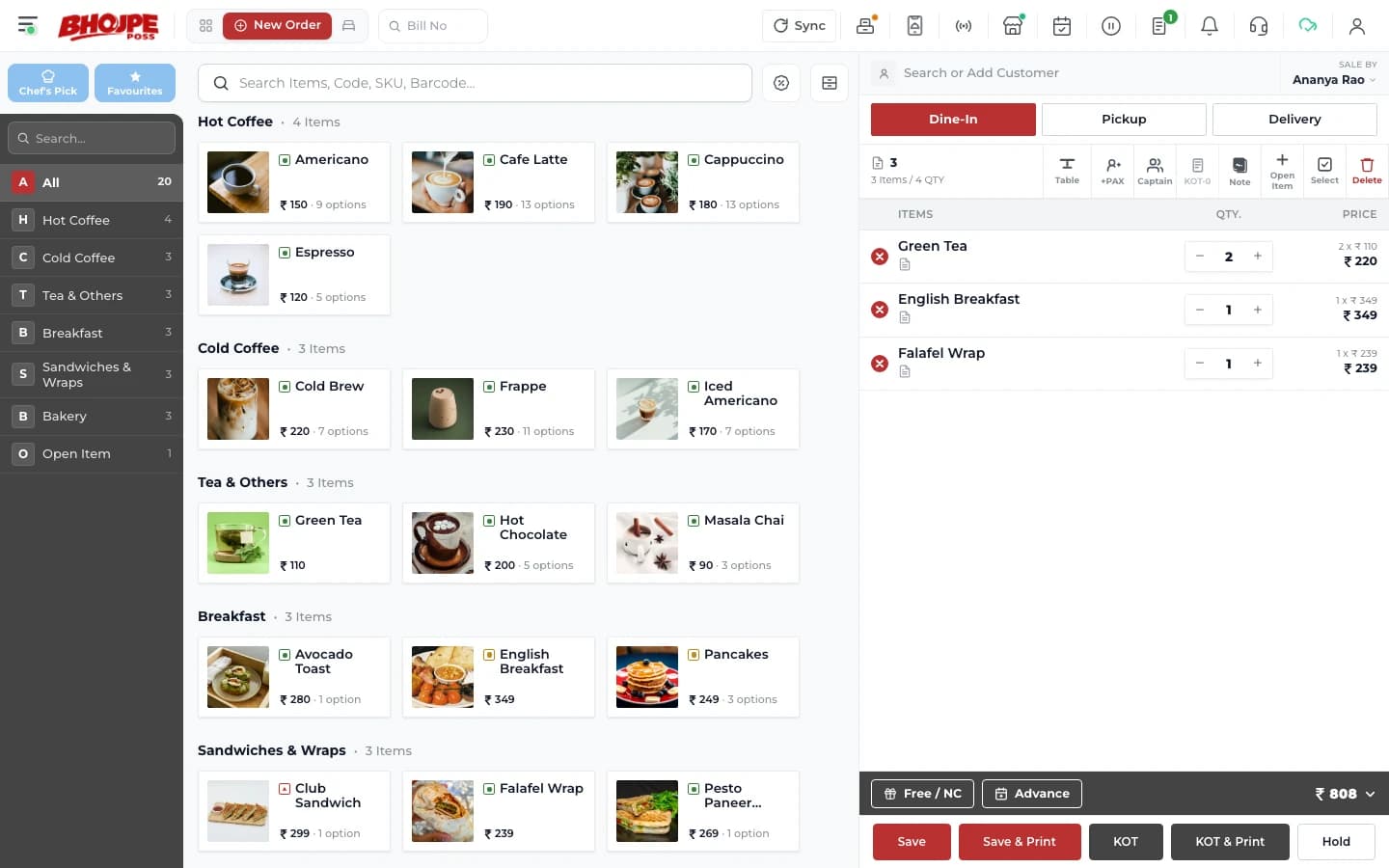
Most GST mistakes at the counter come from people working out tax by hand or changing it bill by bill. In Bhojpe billing, tax rules are set once and applied to every bill, and the GST summary and bill-wise tax reports can be handed to your accountant at month end.