
Most restaurants don't lose money on one big mistake. They lose it on small, repeated ones: over-portioning, over-ordering and ingredients that expire before they're used.
1. Standardise your recipes
When every chef uses the same quantities, both taste and cost become predictable. Write down recipes with exact measures for each dish.
2. Track stock against sales
If you know how much of each ingredient a dish uses, you can compare what should have been used with what actually was. The gap is your wastage.
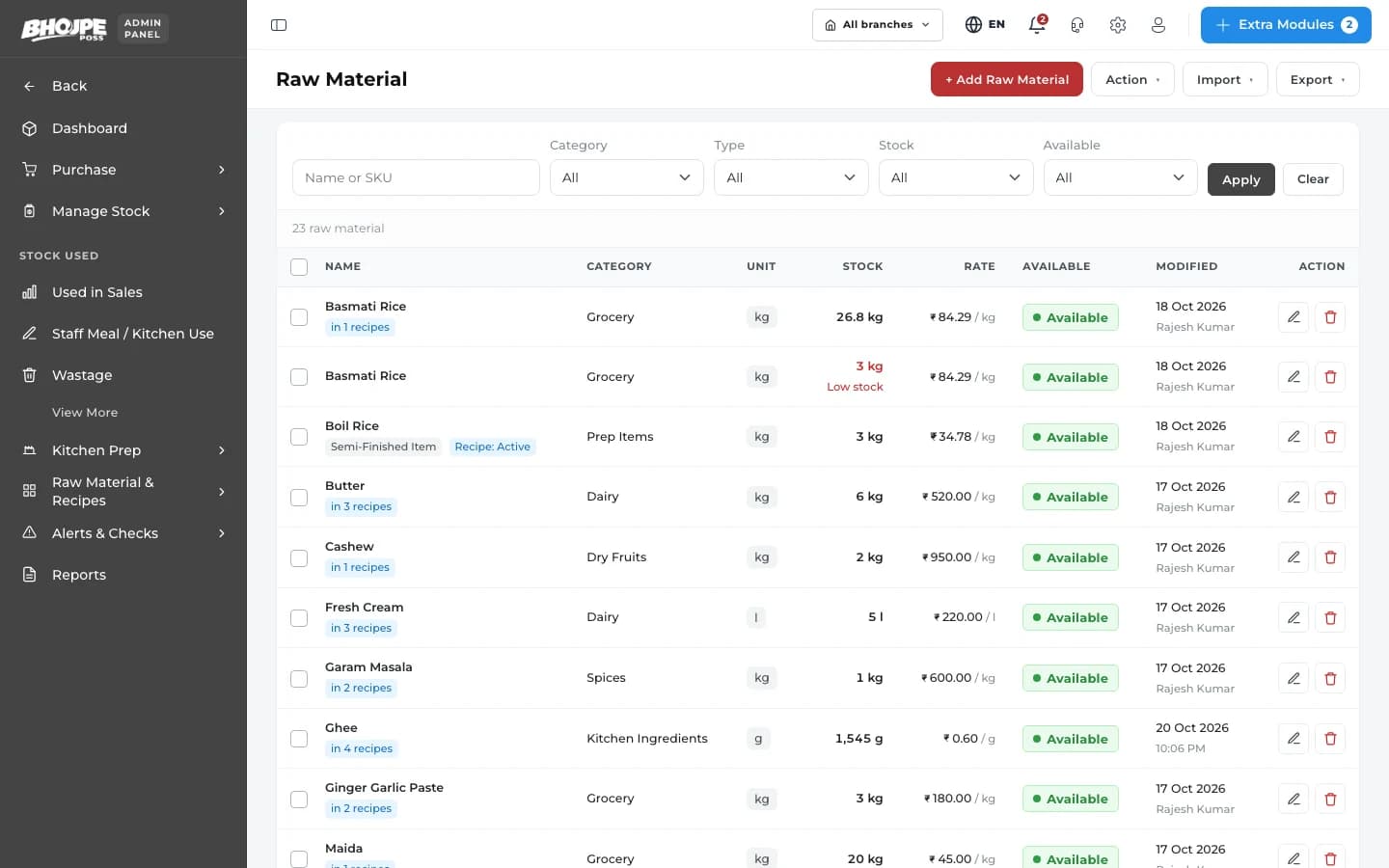
3. Record wastage honestly
Make it easy for staff to log spoilage and mistakes. You can't fix what nobody writes down.
4. Order based on data, not habit
Use your item-wise sales reports to plan purchases. Ordering the same quantity every week regardless of demand is one of the most common causes of waste.
5. Follow first-in, first-out
Label and arrange stock so older items are used first.
6. Review slow-moving dishes
Items that rarely sell often have dedicated ingredients that expire. Consider reworking or removing them.