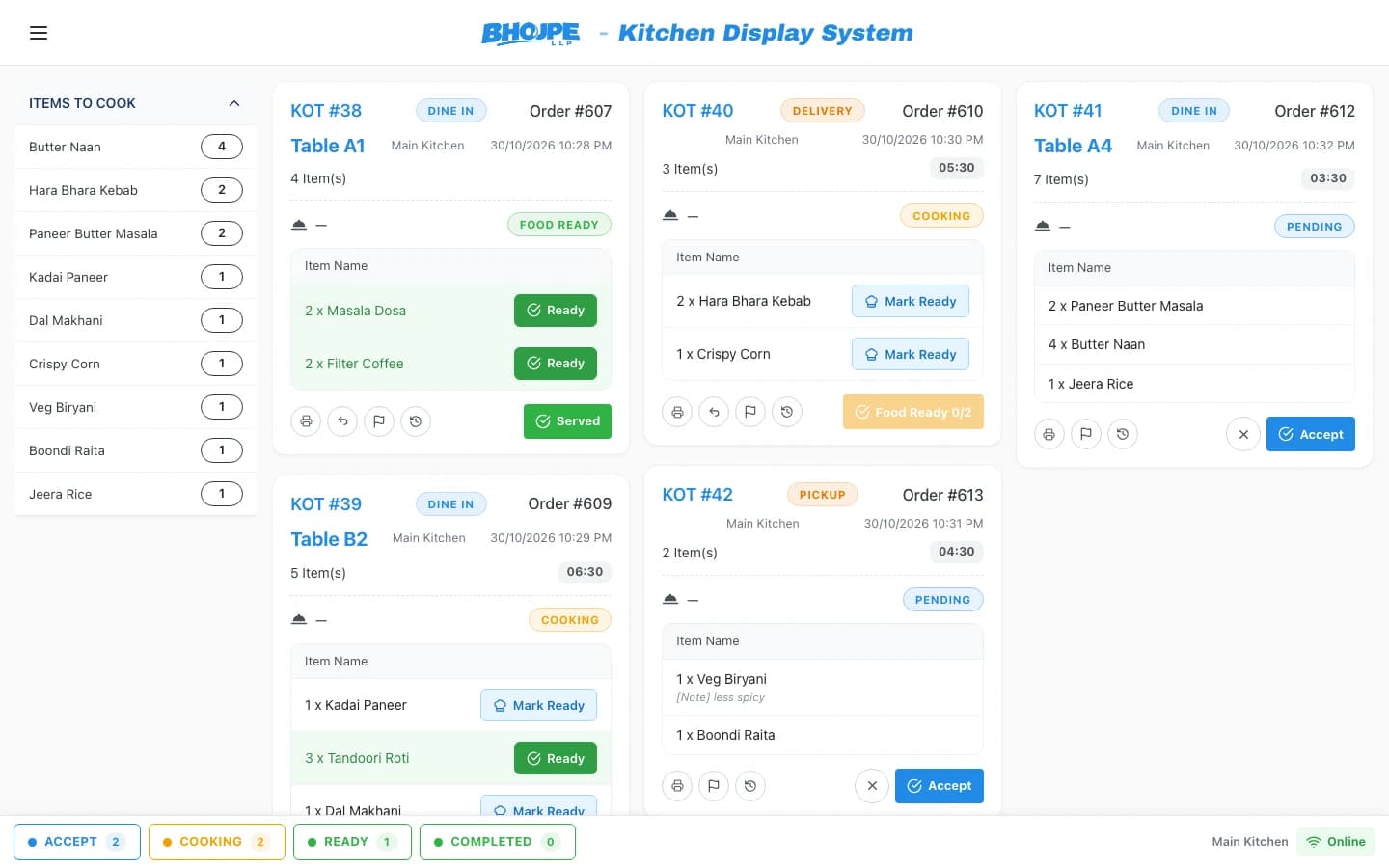
A KOT — kitchen order ticket — is the instruction that tells your kitchen what to cook. Every time a captain or cashier takes an order, a KOT carries that order to the right station.
What a good KOT contains
- The table number or order number
- Each item and its quantity
- Special requests, like 'less spicy' or 'no onion'
- The time the order was placed
- The kitchen station it belongs to
Handwritten vs. POS-generated KOTs
Handwritten slips are quick to start with, but they get misread, lost or forgotten during a rush. A POS-generated KOT is printed — or shown on a kitchen display — the moment the order is punched, with no handwriting to decode.
If the kitchen has to ask the captain what an order says, the KOT has already failed.
Routing KOTs to the right station
In kitchens with separate stations — tandoor, Chinese, bar, desserts — a single KOT for the whole order slows everyone down. Station-wise KOTs send each item only to the team that prepares it.
When to move to a kitchen display
If printed KOTs are piling up, getting wet or going missing, a Kitchen Display System (KDS) can replace paper with a screen that shows orders in sequence and lets chefs mark them ready.